

Why Light Gauge Steel Is Ideal for Modern Home Extensions | DB Space Modular
Why light gauge steel is ideal for modern home extensions
When homeowners plan an extension, most of the focus naturally goes on layout, appearance, and budget. But the structural system sitting behind the plasterboard has a huge influence on how well that extension performs, how quickly it’s built, and how it behaves over the long term.
At DB-Space Modular, we use light gauge steel framing for many of our home extensions because it offers predictability, accuracy, and durability that suit modern living spaces. Whether you’re extending for a larger kitchen, an extra bedroom, a home office, or a multi-use family space, light gauge steel provides clear advantages over traditional timber frame in many extension scenarios.
Below, we explain why steel framing works so well for residential extensions and why more homeowners are choosing it.
Designed for precision in domestic extensions
Home extensions are all about integration. New structure meets old structure, and any movement, distortion, or inaccuracy tends to show up where the two connect.
Light gauge steel framing is manufactured to exact dimensions in a controlled environment. Unlike timber, it doesn’t shrink, warp, or twist as moisture levels change. That dimensional stability is especially valuable when tying a new extension into an existing house, where:
wall lines need to stay straight
ceilings need to align cleanly
doors and glazing must remain square
internal finishes should stay crack-free over time
In contrast, timber naturally contains moisture and continues to adjust to its environment after installation. That movement is well understood in the industry, but in extensions it can lead to hairline cracking, small alignment issues, or the need for additional detailing to accommodate shrinkage.
Faster build times and less disruption at home
One of the biggest concerns homeowners have is how long an extension will take and how disruptive the process will be.
Light gauge steel works extremely well with offsite and hybrid construction methods. Frames can be manufactured in advance and assembled quickly on site, which helps to:
shorten overall build programmes
reduce time with open walls or exposed roofs
minimise noise and mess compared to prolonged wet trades
For homeowners living in the property during the build, this can make a noticeable difference to day-to-day life. A faster, more predictable structure phase helps keep the project moving and limits disruption.
Reduced movement means better finishes long term
Extensions are often judged years after completion, when the initial excitement has worn off and the building has settled into everyday use.
Because light gauge steel doesn’t move with changes in humidity, it provides a stable base for internal finishes such as plasterboard, joinery, kitchens, and fitted furniture. Over time, this can mean:
fewer cracks around openings
better alignment of kitchen units and worktops
less stress on tiled finishes and junctions
a generally more solid feel to the space
This stability is particularly valuable in open-plan kitchen-diner extensions, where large spans, wide openings, and extensive glazing place higher demands on the structure.
Strength without bulky structure
Light gauge steel has an excellent strength-to-weight ratio. In practical terms, this allows engineers and designers to achieve structural performance without overly bulky members.
For homeowners, this can translate into:
cleaner ceiling lines
more flexibility for large openings
better use of internal floor area
easier coordination with glazing systems
In extensions where space is tight or where planners and designers are pushing for maximum light and openness, this structural efficiency can be a real advantage.
Moisture resistance and peace of mind
Extensions are often built in exposed conditions, sometimes during less-than-ideal weather. Timber frames can be vulnerable to moisture during construction if not carefully protected, and long-term moisture issues can affect durability if detailing fails.
Light gauge steel does not rot and does not support mould growth. While good design, membranes, and ventilation are still essential, steel removes one major variable from the equation: the structure itself won’t degrade due to moisture exposure.
This is particularly relevant for:
rear extensions with flat or low-pitch roofs
side return extensions in tight boundaries
extensions with bathrooms or utility rooms
Fire performance considerations in residential extensions
Fire safety is an increasingly important consideration in residential construction. Light gauge steel is non-combustible, meaning the structural frame does not add fuel to a fire.
While the overall fire performance of an extension depends on the full system (linings, insulation, cavities, and detailing), starting with a non-combustible frame can simplify fire design and provide reassurance, particularly where extensions are close to boundaries or neighbouring properties.
Sustainability and long-term value
Sustainability is about more than just materials; it’s also about lifespan, adaptability, and performance. Steel framing offers strong circular economy potential because it is widely recycled and can be reused or repurposed at end of life.
For homeowners, this supports:
long-term durability
lower risk of hidden structural issues
strong resale appeal due to build quality
confidence in a modern, engineered construction method
Timber can also be a sustainable choice when sourced responsibly, but for extensions where longevity and precision are key, steel often provides a more predictable outcome.
When timber frame may still be suitable
It’s important to be balanced. Timber frame can still be a good option in certain extension projects, particularly where:
designs are optimised specifically for timber systems
local skills and supply chains favour timber
the extension is small and movement risk is minimal
However, as extensions become more open-plan, more highly glazed, and more integrated with existing homes, the advantages of light gauge steel become increasingly clear.
Why DB Space Modular uses light gauge steel for extensions
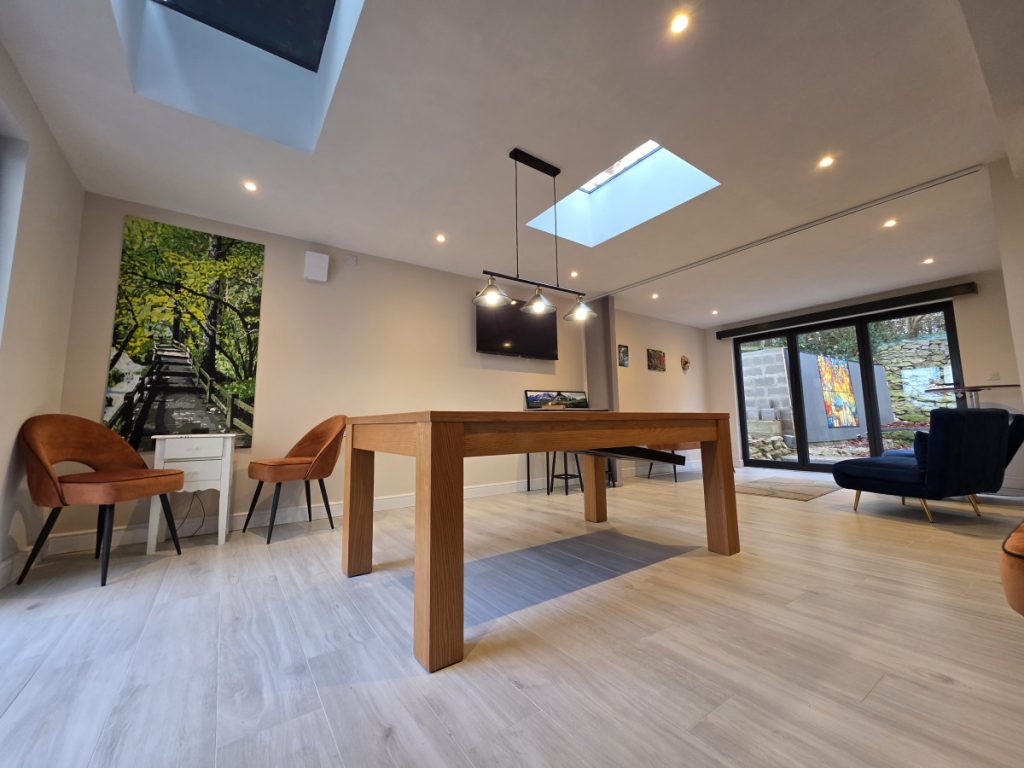
At DB Space Modular, we specialise in modern home extensions using light gauge steel because it aligns with how people want to live today: open spaces, clean finishes, fast programmes, and long-term reliability.
Our approach combines:
engineered steel framing
offsite precision where possible
careful thermal and acoustic detailing
full design-and-build coordination
This allows us to deliver extensions that not only look good on completion day, but continue to perform year after year.
If you’re planning a home extension and want to understand whether light gauge steel is right for your project, we’re happy to talk through your ideas, site constraints, and budget.